
Sickos and Heroes.
Essays in Quillette and The Dispatch.

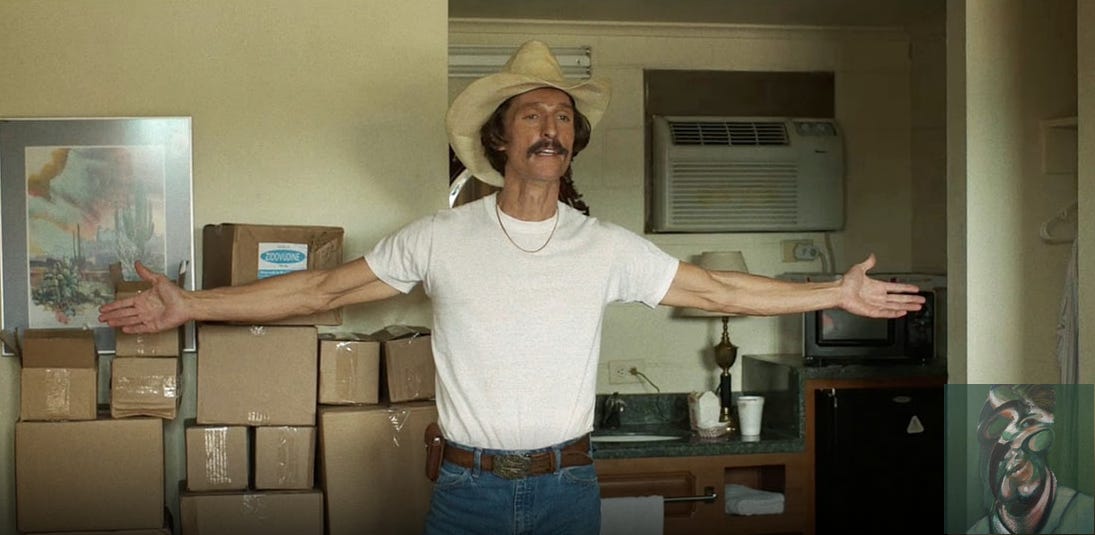
I have a long read out today in the magazine Quillette about the medical scandal behind chronic fatigue syndrome (myalgic encephalomyelitis) and how it relates to the history of HIV/AIDS activism, and the gut reaction many people have to that comparison is exactly what I’m dissecting in the piece. This disease (ME/CFS) is just not taken seriously, and it’s very serious! The only thing worse than having a horrible illness that kills your life is having a horrible illness that people don’t believe exists. In just the past couple weeks, I’ve heard of a bunch of other patients dying in totally preventable circumstances. They die horribly, alone, in the dark. People with moderate to severe ME/CFS are as sick and disabled as cancer and AIDS patients on their death beds, but every day of their lives. I’m sorry if that hits wrong but it’s true! Many of us should be in some sort of hospice type situation, but there’s literally no speciality care or clinic or a single hospital bed set aside for patients with this disease in entire developed countries. Something has gone very badly wrong here.
Why is there no treatment and barely any research funding or general understanding for a very common life-rupturing condition? In the essay I argue that it boils down to policy decisions made by high-ranking public health officials at the CDC and the NIH in the 80s and 90 to basically de-legitimize and mis-categorize this disease — as just some weird thing that depressive women get because they’re unsatisfied with their love lives or whatever — which allowed these very creepy and unhinged psychiatrists to come in and basically do whatever they wanted with these patients, make them do jumping jacks, tell them they can get better with happy thoughts, throw them in at the deep end of the pool (yes, literally). And that’s how you end up with this emperor has no clothes, giant pink fucking elephant in the room scenario where there’s this literally unbelievably bad illness ravaging the population that simply isn’t being addressed in any type of normal reasonable way. And I have all the receipts.
But it’s not just a story of tragedy and pain and injustice but of courage and human dignity and willpower, about people who fought like hell against all odds in impossible situations to have their disease recognized when the world left them to suffer and die. This illness would still be completely ignored and laughed out of the room if it wasn’t for these patients and advocates, and the doctors and journalists and family members and caregivers who made it their problem, too. People tend to romanticize these sort of collective struggles but they don’t actually happen so often really, and when they do, it doesn’t always look how you think.
This may be the last I write about this disease for awhile, it’s just too personal for me, I’m too affected by the issue, I can’t really deal with people who don’t think it’s real, I’m struggling just to get basic treatment and not fall into the abyss. You really need journalists covering this issue who are healthy and can see things from the outside, though there are many incredibly sick patients devoting their lives to advocacy and doing a much better job than I ever could with my wordy word salads. Anyways, read it and weep, or jump with joy, whatever floats your boat. Let me know what you think. Comment, email, whatever. Share it around if you please. The essay begins:
In Jean-Marc Vallée’s 2013 biopic Dallas Buyers Club, Matthew McConaughey plays Ron Woodruff, a bigoted rodeo cowboy who was diagnosed with AIDS in the 1980s and given just thirty days to live. Faced with social ostracism and rapidly declining health, Woodruff reads up on his disease and launches a “buyers club” in Dallas to peddle unapproved treatments to desperate patients in defiance of the medical establishment. By the end of the film, he has become a spokesperson for a community he once despised and a sort of folk hero. Despite the liberties that the filmmakers take with Woodruff’s story, Vallée’s film accurately captures the historic arc of HIV/AIDS advocacy, from medical neglect and stigma though reluctant acceptance and study to recognition and treatment. What was once a death sentence is now a disease with which most infectees can live a long and fulfilling life. I hope that understanding of my own condition—Chronic Fatigue Syndrome or Myalgic Encephalomyelitis (clinically, ME/CFS)—will follow a similar trajectory…
Weirdly enough, I have another piece out today, in The Dispatch — I don’t know how this happened, honestly, feels like the universe is pointing directly at my stupid face — about the idea of knights and heroes, ‘Hero’ Isn’t a Bygone Concept: Courage can persist even in the modern world. (The article is free but it asks for your email, or an email). These subjects, illness and heroism, are not related but they kind of totally are. And in these super shady times, with our whole digital doomscape hellworld of piss and shitty dog dicks, we really do need heroes now more than ever, people who walk the talk, to show us what’s truly possible. Might seem lofty, but I don’t think it actually is, and anyways that’s kind of the whole idea of ideals, they ask you to become more than you are. I’m not much of a hero, but I try not to be a terrible person when and how I can, I bear my burden and not always so well, and I wish I could do more and better. There really is such a thing as heroes, they’re just not making a big deal of it or shamelessly chasing clout where everyone can see.
Whatever it is, it’s not this, it’s not squealing influencers or apps on glowing screens or faceless corporations selling you back your own data while living ecosystems crumble and our world just gets sicker and sicker, no, no, not this, anything but this. We’ve confused goodness and virtue with ego and money power! Everything’s totally upside down and backwards! What the hell is going on!? Sorry, I went off a bit there, here’s how the article goes:
The modern imagination is fascinated with medieval history, knighthood, and heroism, with countless films and shows centering around these periods and themes. There is clearly some sort of unconscious longing at play, a yearning to connect with the values and beliefs that carried our ancestors through much harsher times. As the Gen Z writer Freya India has observed, what many young people seem to crave today is to be humbled and bound, to be tethered to something that lasts. And so while stories of knights and heroes may be antiquated on the surface, we can’t seem to totally shake off these ideas…
I just want to say, while I have you, thank you all for, you know, whatever, being here, giving me something to do, somewhere to be, “supporting” me and shit. I don’t really know why you are doing that or what people want from me at this point, or if I have anything to offer anymore besides my blue and beating heart. But maybe together we can get somewhere, here, sort some things out, make it make sense, see something new. Maybe not. Maybe I’ll die tomorrow. Who cares? I do. Starting from zero, got nothing to lose. Me, myself, I got nothing to prove.
Hi Sam! Thank you for another dispatch from your life. And congrats on two more published pieces. Even though you don’t feel well much of the time, sharing yourself with others through your writing adds value to my life. I watch the movies you recommend and always get something out of them.
One thought for reporting is The Epoch Times. They cover the uncovered and have good health reporters. Would you like me to send an email to them? Would you be up for being part of a story?
Much love, xoxo